Commercial Ventilation Maintenance: Regular Care and Inspection Guidelines
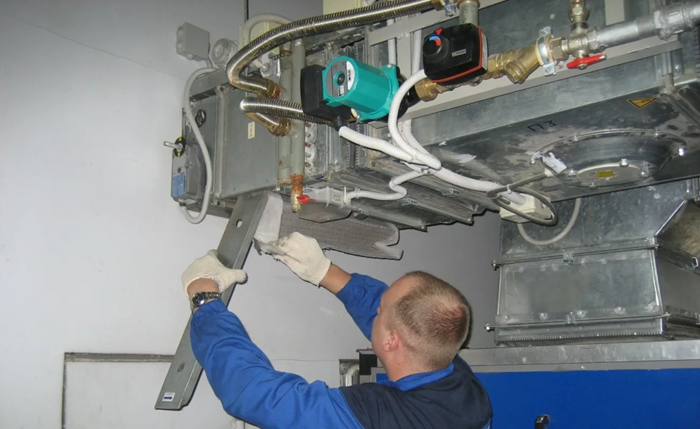
Commercial ventilation in offices, restaurants, warehouses, and industrial facilities is responsible not only for comfort but also for sanitary standards, personnel safety, and equipment safety.
Regular maintenance reduces the risk of downtime, improves energy efficiency, and extends the lifespan of air handling units.
Properly organized service from LA Refrigeration & Air Conditioning Co. includes inspections, cleaning, consumable replacement, automation adjustments, and air quality monitoring. In practice, a scheduled approach is most effective: a maintenance plan with a frequency schedule, a maintenance log, and clear quality criteria.
Key Maintenance Rules
1) Perform maintenance according to schedule, not “on an ad hoc basis.” A ventilation system may appear to be working properly, but still lose performance due to dirty filters, worn belts, impeller imbalance, or incorrect automatic settings.
2) Follow safety requirements. Before starting work, disconnect and lock out the power supply, check for power failure, wear respiratory protection when working with dust and deposits, and comply with requirements for working at heights and in mines.
3) Record measurements and changes. Any filter replacement, damper adjustment, or VFD reconfiguration should be recorded in a log: date, person performing the operation, before/after parameters, and comments. This speeds up diagnostics and helps with budget planning.
4) Focus on actual air parameters. Important factors include not only “spinning/blowing,” but also air flow, pressure drop across filters, supply temperature, noise and vibration levels, CO concentrations (if equipped with sensors), and the correct operation of the heat recovery and heating systems.
What to check weekly and monthly
- Filters: visual assessment of contamination, pressure drop monitoring, absence of air leaks along the frame.
- Fans: abnormal noise, vibration, heating of bearing assemblies, impeller integrity.
- Drives and belts: tension, pulley alignment, presence of cracks and slippage.
- Dampers and valves: smooth operation, correct end positions, serviceability of servo drives.
- Drainage and trays (if there are cooling/dehumidification sections): no blockages, leaks, or odor.
- Automation: correct sensor readings, scheduled activation logic, absence of controller failures.
Seasonal maintenance: before summer and Winter
- Calibration of temperature/humidity/pressure sensors, verification of settings and scenarios.
- Checking heat exchangers (heaters, recuperators): cleaning, absence of ice, protection functionality.
- Checking the tightness of sections and air ducts: leaks impair balance and increase energy consumption.
- Checking air flow and balancing: compliance with the design, correct operation of VAV/zonal dampers.
Scheduled routine inspections: what to inspect during each inspection
Scheduled routine inspections are necessary to ensure that the ventilation system in a commercial building operates reliably, safely, and with predictable air quality. Regular monitoring helps promptly detect deviations in noise, flow, pressure, vibration, and pollution, preventing accidents and tenant shutdowns.
It’s best to keep a log of inspections (paper or electronic): date/time, node, measurements, comments, actions performed, and responsible person. A consistent route and set of measurements simplifies comparisons and quickly identifies trends.
Inspection Checklist by Frequency
Daily/every shift (operator walkthrough)
- Control panel/dispatch: no alarms, correct modes (day/night), confirmation of activation of required units.
- Supply/Exhaust: extraneous noises, whistling, odors, unusual vibration, overheating of the air handling unit casing.
- Service Areas: tenant complaints, localized “dead zones,” condensation on grilles/diffusers.
- Condensate and Drainage: leaks, full trays, no overflow, functioning siphon.
Weekly
- Filters: visual contamination, integrity of frames/seals, no air leaks past the filter.
- Belts/couplings/fasteners (if applicable): belt tension, no cracks, loose bolts, or pulley misalignment.
- Air intake/exhaust: no debris, snow/leaves, clear passage, intact screens and grates.
- Silencers and flexible connectors: no breaks, loose clamps, air leaks.
Monthly
- Measurements: pressure drop across filters, static pressure across the unit, estimated flow rates/speeds at checkpoints.
- Fan: vibration, impeller condition (sticking), balancing based on signs, fastener tightening.
- Electrics: terminal condition (no carbon deposits/overheating), no cable damage, correct operation of automation and Sensors.
- Supply section: tightness, condition of thermal insulation, absence of frost/condensation in abnormal locations.
Quarterly
- Heat exchangers (water/electric): fin contamination, uniform heating, operation of protection devices (overheating, antifreeze), absence of leaks and corrosion.
- Valves and actuators: operation of fire/smoke exhaust (according to facility regulations), air regulating dampers, return to initial position.
- Duct network: accessible sections for suction/leakage, condition of hangers, vibration mounts, expansion joints.
- Calibration/check of sensors: temperature, humidity, CO2/air quality (if installed), accuracy of readings.
Semi-annually
- Deep Cleaning of accessible sections: ventilation chamber, impeller, condensate tray, drain lines, and disinfection if necessary.
- Bearings: play, noise, temperature; Lubrication/replacement according to the manufacturer’s instructions.
- Aerodynamic inspection (selective): confirmation of flow rates for main lines, correct adjustment of throttle valves.
Annually (extended maintenance and audit)
- Full inspection of units: disassembly/cleaning of key components, inspection of heat exchangers, replacement of filters based on actual pressure drop/service life.
- Check for compliance with operating modes: actual flow rates, air exchange rate, supply/exhaust balance, correctness of schedules.
- Fire safety: inspection of fire dampers, connections to the fire alarm/fire alarm system, logging according to facility requirements.
- Report and work plan: list of defects, priorities, estimate, rectification schedule, energy efficiency recommendations.
Result: scheduled routine inspections provide consistent monitoring of safety, operability, and air quality. By recording key performance indicators during each inspection and immediately addressing minor issues (filters, drainage, fasteners, noise/vibration), a commercial ventilation system will operate smoothly, consume less energy, and require fewer expensive emergency repairs.